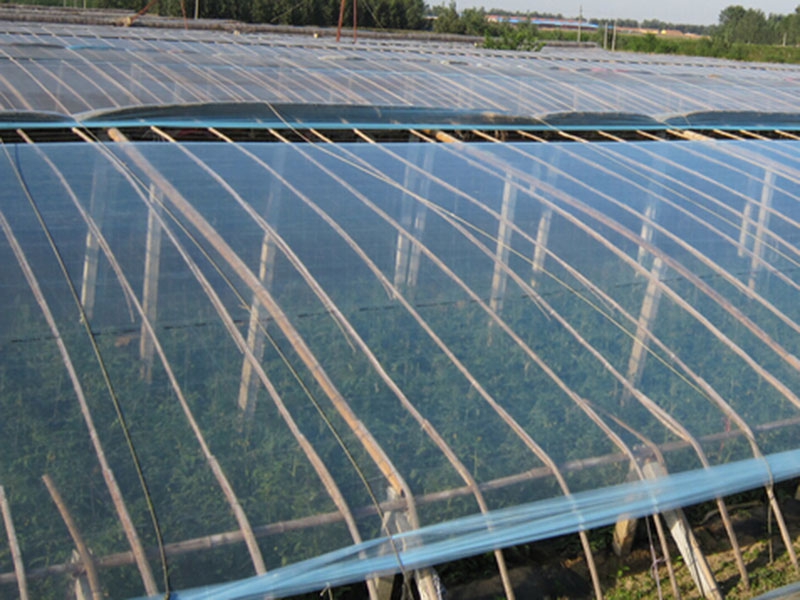
The light transmittance of agricultural film consists of two parts: direct light and scattered light. A diffuse scattering film refers to one where scattered light accounts for a larger proportion. It has the following advantages:
1. The light entering the greenhouse is softer and more uniform, avoiding crop burns caused by direct light during high-temperature periods.
2. The temperature of the diffuse scattering film in the morning and evening is slightly higher than that of the transparent film, while the temperature is lower than that of the transparent film at noon when the light is strong. (For some high-temperature areas in the south, it reduces the greenhouse temperature at noon, prevents crop burns, and provides a more comfortable working environment for workers.)
3. The light is more uniform and the scattered light increases, so the irradiation area is larger, enabling all crops in the greenhouse to receive sunlight regardless of their position. At the same time, for some tall-stalk crops, the crops below will not be shaded by the leaves above.